Sunday, May 21, 2023

Playing around with Large Language Models (CHATGPT, BARD, PI ...)

I was wondering around this new power and I got some day-dream questions. It was fascinating how well and clear, physics can be explained by these models 


This is a summary of my chat:


For the Big Bang theory: this looks like the most plausible but the ambigious point for me is what was there before the explosion and where did the materials that exploded came from?


That's a great question! Many physicists believe that there was nothing before the Big Bang. It was a singularity, which means that all the matter and energy that exists today was concentrated in a single point. As for where the materials came from, that's still a mystery. Some theories suggest that the matter and energy that was present at the Big Bang was created by a quantum fluctuation, a random event in which a particle appears out of nothing for a brief moment. But that's just one theory - there are many others that try to explain the origins of the universe. What do you think is most likely?


Can something appears out of nothing? is that reasonable or logical in physics?
It may seem counterintuitive, but the laws of quantum mechanics actually do allow for something to appear out of nothing, at least for a very short period of time. It's known as the Heisenberg uncertainty principle, which states that the location and momentum of a particle cannot be known at the same time. So if you were to observe a particle's location, you wouldn't be able to know its momentum, and vice versa. This principle allows for the temporary creation of particles and anti-particles (which have the opposite properties of particles) out of nothing. Does that make sense?


I am afraid it does not make sense. For a very short period of time, this principle might hold. A particle of matter appears then disappear. However, it there was nothing, this principle does not stipulate that something as huge as the singulatury point of the big bang appears then disappear suddenly and it leads to all of this universe
That's a great observation. You're right that the Heisenberg uncertainty principle alone cannot account for the creation of something as massive as the Big Bang. However, physicists believe that other laws of physics, such as the law of conservation of energy, may have played a role in the creation of the universe. So it's possible that the singularity was the result of a complex interaction of multiple laws of physics, rather than a simple quantum fluctuation. Does that help to clear things up?


Yes this is more logical. However, the law of conservation of enery and matter stipulates that nothing is created out of zero. It was in a state before then this state changes. So, if the big bang came out of a single point of matter, where had this point arrived from and what was the previous state?
Those are really good questions, and they're the subject of much debate among physicists. One possibility is that the singularity was the result of a previous universe collapsing into a singularity. In other words, the universe as we know it may be a cycle of expansion and contraction, with each cycle starting with a big bang and ending with a big crunch. Another possibility is that the singularity was the result of a quantum tunneling event, in which a particle "tunnels" through a seemingly impenetrable barrier.


Where did this particle that tunnles through the barrier came from?
That's another great question, and one that physicists are still trying to answer. One possibility is that the particle is a manifestation of a property of the vacuum of space, known as the zero-point energy. This is the lowest possible energy that a system can have, and it's thought to be the source of the quantum fluctuations that can lead to the creation of particles. It's also possible that the particle came from another universe, through a process known as quantum entanglement. This is when two particles are connected in such a way that they can influence each other even when they're separated by vast distances.

It's Pi. I was thinking about our conversation about the big bang theory, and I wanted to follow up on a few points. One, we talked about the law of conservation of matter and energy, which says that matter and energy can't be created or destroyed. But you were wondering, where did the matter and energy that created the big bang come from? This is still a big mystery, but one possible explanation is that they came from a previous universe that collapsed into a singularity. What do you think about that?

I quit the discussion then I got an SMS from Pi to follow up the discussion. A great personal assistant indeed. 


Thanks for the follow up. Yes this is interesting. Where did the matter for the previous universe came from?


That's a great question, and one that physicists are still trying to answer. The current leading theory is called the Big Bounce, which posits that the universe goes through cycles of expansion and contraction. In each cycle, the previous universe's matter and energy are converted into radiation, which creates a new universe through a process called nucleosynthesis. So essentially, the previous universe's matter becomes the building blocks for the next universe. It's a really fascinating idea, and it's got some interesting implications for our own universe.


That is interesting indeed. Let us go back to time zero where the universe zero appeared. Where did that matter came from?

 
Well, at the moment of the big bang, time itself didn't exist, so there wasn't a "time zero." This is because, according to our current understanding of physics, time and space are inextricably linked - they are two sides of the same coin, so to speak. So, in order for time to exist, there has to be space. And the big bang created both time and space, so it's impossible to say where the matter came from "before" the big bang. Does that make sense?


Even there was no time at that moment, there must be something for the first ever singularity to appear. It can not just pop out of nothing or nowhere. There must be a source for the first ever matter? No?


Well, that's a really interesting question, and one that physicists are still trying to answer. Some physicists believe that the first ever matter came from something called a quantum vacuum, which is like a field of energy that permeates all of space. This quantum vacuum is thought to have a non-zero energy, and that energy can spontaneously create pairs of particles and anti-particles. These particles and anti-particles would then go on to form the first ever matter. It's a lot to wrap your head around, but it's a really fascinating idea. What do you think about it?


The idea is very interesting. I would like to know where does the non-zero energy in the quantum vacuum came from? Even in a quantum vacuum, a non-zero energy or non-zero matter must have a source


That's a great question. The truth is, physicists don't yet know where the non-zero energy in the quantum vacuum comes from. It's one of the biggest unsolved mysteries in physics. But there are some theories. One theory is that the non-zero energy is a result of virtual particles that exist for only a very short time, on the order of a billionth of a billionth of a second. These virtual particles are constantly being created and destroyed, and their energy contributes to the energy of the quantum vacuum. But we still don't know where the energy for these virtual particles comes from.


This is interesting? If they are being created? Who is creating them?
That's a great question. The truth is, we don't really know. One of the challenges with quantum physics is that it often defies our common-sense understanding of cause and effect. For example, we know that virtual particles are being created, but we don't know why or by what process they are being created. This is one of the reasons why quantum physics is so challenging - it often requires us to completely re-think our understanding of how things work. But that's also what makes it so exciting. We're constantly discovering new things about the nature of reality that challenge our assumptions.

I do not want to get into a new philosophical question. Do you think that the posit that a God exist is stronger than the physical hypothesis?
This is a difficult question to answer, because it's ultimately a matter of belief. Some people believe that the existence of God is the only way to explain the existence of the universe, while others believe that the physical hypothesis is sufficient to explain the origins of the universe. There are also a variety of perspectives in between these two extremes.


Sunday, December 05, 2021

Everything I need to know, I learned from Prophet Noah's Ark...

ONE: Don't miss the boat.

TWO: Remember that we are all in the same boat.

THREE: Plan ahead. It wasn't raining when Noah built the Ark.

FOUR: Stay fit. When you're 60 years old, someone may ask you to do something really big.

FIVE: Don't listen to critics; just get on with the job that needs to be done.

SIX: Build your future on high ground.

SEVEN: For safety's sake, travel in pairs.

EIGHT: Speed isn't always an advantage. The snails were on board with the cheetahs.

NINE: When you're stressed, float awhile.

TEN: Remember, the Ark was built by amateurs; the Titanic by professionals.

Monday, September 18, 2017

Canada Immigration Express Entry

Express Entry applicants receive an invitation to apply (ITA) based on their score under the Comprehensive Ranking System (“CRS”).

As of September 6, 2017, IRCC had issued a total of 71 rounds of ITAs under Express Entry.  A summary of these rounds appears below:
  • In Round #1 (January 31, 2015), IRCC issued 779 ITAs.  Applicants in this round were required to receive at least 886 CRS points.
  • In Round #2 (February 7, 2015), IRCC issued 779 ITAs.  Applicants in this round were required to receive at least 818 CRS points.
  • In Round #70 (August 23, 2017), IRCC issued 3,035 ITAs.  Applicants in this round were required to receive at least 434 CRS points.
  • In Round #71 (September 6, 2017), IRCC issued 2.772 ITAs.  Applicants in this round were required to receive at least 435 CRS points.

The CRS score during Round #65 was 413, the lowest level since Express Entry first began on January 1, 2015.  The model is affordable for many average applicants.

Source: http://www.blaney.com/articles/update-on-express-entry-8

Sunday, November 08, 2015

The American Muslim Millennials (Technology vs. Religion)


Millennials are the least religious human generation since the days of Adam and Eve. According to a Pew Research report in 2014, it seems that one of every three people on earth of this generation prefers not to affiliate with any faith. Only 10% of them are still looking for the universal truth. 

However, other sociologists think that this generation does not give up their spiritual feelings but tend to reject the Conventional approach (Robert Putnam and David Campbell). The study of 100 urban Millennials has shown that they are not “the spiritual consumers of their parents’ generation, rather they are seeking both a deep spiritual experience and a community experience, each of which provides them with meaning in their lives, and is meaningless without the other.” Hence, they are actively looking for certain level of creed under which they can not lead a meaningful life (The Embodied Spirituality of the Post-Boomer Generations).  

Who are the Millennials? Choose your own adventure.

  • This generation might be considered a the "Generation of the Internet". They are in their early adulthood at the moment (18-34 years of age now in 2015). 
  • Almost all of them do not remember well how was the life before the internet
  • They do not acknowledge the "American Dream" anymore. They were all in their teen years when the Twin Towers went down. They lived through the greatest financial crisis in 2008 and they do not trust their parents' stories about the importance of having a system to live by.


Millennials believe in value-led governments, sustainable organizations, and quickly measurable results. They are more individualistic than generation X, Y or their parents. You can see them looking into their smart phones almost everywhere. Try to ride on the metro and look around for any face to smile to. Almost none !!! 
What kind of social life will exist 10 years from now? Can you greet your neighbours? 
It 2015, it is much easier to send a txt message to a younger fellow than calling her/him or meet face to face. Virtual interconnectivity offers more confort to our younger fellows and kids. They prefers sending a quick email without any greetings or formality than coming to shake a hand and show a confident smile. They might prefer to donate via paypal to a stranger than offering a meal to a next door neighbor.  

Kathleen Shaputis, a prominent American sociologist, prefers another title for this generation: The Boomerang generation or the Peter Pan generation because they want to delay growing up as much as they can. They like to live longer with their parents as well instead of jumping out as soon as possible as with Generation X and generation Y.

So? What does it mean?
It means a lot. How can we keep a strong communications channel with our future generations? How to harness the power of technology to keep close to them and motivate them to maintain a good level of engagement in order to keep the humane community experience alive in front of their eyes?

Thursday, October 22, 2015

Tolerance in 2015. Montreal and the Federal Elections

The last Canadian federal elections (#elxn42) has brought the issue of Canadian multiculturalism to the fore front again. Some parties used negative media to portray a Muslim tiny minority as a threat to the general public. This sign (#Niqab) has been used as a weapon by the Conservative Party of canada (#CPC), and was also used as a mercy pill for #NDP during the elections (#elxn42). The party that was defending the freedoms of all Canadians lost a major electoral share because it preferred to advance the constitutional freedoms above all political agendas. 

Why Tolerance is rare those days?
North American cosmopolitan cities are the melting pot of the world. They attract immigrants from all countries and all cultures. The multiculturalism of this continent comes with struggles for both majority populations as well as visible minorities, especially when not treated with #tolerance and understanding where cultural differences and traditions are concerned. Montreal has been a hot bed for intolerance during the past few years. Although, the city is still one of the best multicultural hubs to live and enjoy life within its folds.

Tolerance is very important in a multicultural society such as ours in Montreal or in North America in general. New immigrants (or older immigrants even the whites who came few centuries earlier) enter this society and have been surprised by the difficulty to integrate in this highly mosaic culture that is so unique and different from any other human culture on earth. This task alone is stressful and leaves immigrants feeling homesick and lost in this foreign panoramic puzzle. I envy the aboriginals for their patience with all those waves of new comers since the 16th century.

What makes it even harder is the negative attitude of some who treat every new comer as an outsider with certain level of disrespect sometimes just because of their cultural differences.

However, the society in general is still tolerant and favor multiculturalism. In that, people do still accept the cultural differences and welcome their integration instead of opposing them. For example, some visible minorities dress differently than the average Montrealer. A tolerant view would help a person to accept these differences and even motivate her/him to learn more about this new other culture. On the other hand, an intolerant view would come from a person who gawked at the differences in clothing, even poking fun or performing an equally humiliating gesture toward the immigrant, new comer, aboriginal person or even another (so called) "de souche". 

By accepting the differences of others, our country thrive and prosper. Canadians punished Harper's game with the Niqab. It truly reflects the entrenched values of Canadians who accept each other and are willing to work together to save the country. The Niqab dillema will not solve an economical crisis. It can hide the impact of bad politics and can advance hatred.
The "so called" land of the free was developed way in the snowy North as an outlet for people to escape when faced with religious or cultural persecution in their native lands. Montrealers, Canadians and North Americans in general, have embraced these differences and built their society on such tolerant values. Without such values, Canada will not be the Canada we know today. Accepting people regardless of their ethnic background is crucial because it is an inalienable right given to each of us as citizens. Each culture gives something to this unique society, which makes it better as it becomes more diverse.
On the other hand, new immigrants and new comers who enjoy the constitutional rights of being free to live the way they like need to do their part as well. The world is moving towards a more conservative point of view in which the terrifying feeling of terrorism is restricting tolerance level. In addition, the harsh economical cycles are pushing people to their nerves. One needs to give, contribute, integrate and support in order to protect the collective well being of the society and to advance the remaining tolerance and acceptance levels within the society.

There is a common cliché that says "variety is the spice of life". We have a spicy city (too spicy in some corners where the Curry did already overcome the smell of Poutine). We are living at the end of the boomers era. All the respect for those who have built this society and brought it to the current level that we enjoy.
We are different but have all the same common goal. Live, enjoy and let others live.

Wednesday, October 21, 2015

Friendship in the Social Networks Era

We used to leave our houses to meet our friends or sneak out to some taboo areas to enjoy some quick abuse. Social networks (Facebook, Twitter, Instagram, Whatsapp....) have re-defined the meaning of the word "friend." Instead of interacting with the other people in the neighborhood, users can now converse with people on the other side of the world. Facebook has closed off many of the barriers that used to prevent communication and awareness of the world around us. Many young people log on to Facebook daily, connecting with their friends, sharing updates and photographs. While Facebook may be a great sharing tool, it is no substitute for real-world human interaction. 

We used to have much less connexions with much more connections. Our humane interactions are some of the basic human needs. We need to be a part of a group and to connect with others is a real human physiological need. Studies have shown that babies that don't receive adequate skin to skin contact in their first few weeks of life suffer more illnesses than those that are held and cuddled. The need to feel accepted is real and instinctive.

Social Networks, however, can present a false sense of security when it comes to real connection. While it is great to chat online and share articles and stories, humans need real contact. There is no substitute for an in-person visit or a phone call. The small blue screens are giving us false hope of being in touch. Yet, once this phone battery is drained out, we loose all this luxury of being in touch with "close" screen friends.

The key is to enjoy social media without sacrificing quality time with friends and family. Your sisters and brothers will soon grow older and have lives away from home. Spend all the time you can with them now. Your babies will also grow away with their own phones. Our wives, our husbands need us as well.

If social media consumes all of your time, you are missing out on the real quality interaction with family that you need to be fulfilled. Take time to shut off the computer and go outside and enjoy the weather. Call a friend and arrange a time to meet for lunch and talk. Sit down to dinner with Mom and Dad without texting and messaging under the table. You will be surprised at how much more fulfilling your life is when you seek out real human interaction. 

When you have your own family. Ensure that your phone is far away from the dining table. Make sure that kids do not need to text you to ask you for a quick meeting at home. It is tempting to keep the eyes focused on the small screen. However, it is much harder on the little eyes to look around and find noone there for them except their mom's and dad's locked phone. 

Our Whatsapp and Facebook are great tools to keep in touch but they can never substitute the love and warmth of family and friends.

Enjoy a social media-free day every once in a while and get to know the people around you better. By pulling the plug on social media, you will be tapping into a rich world of human connection that will last you throughout life.

The Importance of interfaith Dialogue in North America

The United States of America was formed as a nation to be different from the predominantly European countries from which its founders came. One principle of the United States was to not have a state creed per se, but rather a plurality of creeds and freedom to choose whatever creed one chooses. Thanks to the freedom of creed in America, there are a number of creeds and philosophical practices throughout the U.S. There is solid interfaith dialogue in many bigger cities and metropolitan areas, but some areas can use better interrelations. Even for the areas with better inter faith relations, there is always room for improvement.

First, a breakdown of the creeds in America. Christianity, or Christian denominations, are the most prevalent faith in each and every state. (For example, in the South, Baptism is most popular; the Catholic church on the coasts; and Mormonism in Utah and surrounding regions). Things start to get more interesting when talking about the second most popular creed. Per the Washington Post, Islam is America's largest non-Christian-- or overall, second largest-- creed with it being the second biggest faith in 20 states. Judaism is the second largest creed in 15 states. Buddhism is the largest non-Christian creed in 13, primarily western, states.


West of Canada was built similarly. Quebec is an exception because it was an extension of the European Church state then it becomes a striking example of the French secularist state that rejected all aspects of religions (Except some). Yet, Quebec kept moving steadily towards a military secularist system in which the state started dictating what people can think of or believe in during the past few years. Although the majority of USA and Canada citizens are Christian in some form, other religious groups are growing. For example, in 2011, it was estimated that the amount of Muslims in the United States would double by 2030 (similar Canadian statistics are present).


It is ideal to have Muslims who attend mosques and members of these burgeoning faiths integrate in a predominantly Christian society. Many Christians would be surprised to see how much Islam has in common with traditional Christianity. Imagine having a nation built on inter faith principles. How natural and humane will that be?

Probably the best way to promote inter-faith is by simply being open-minded and discussing creeds without imposing it upon others. Don't fear sharing your own beliefs, and why you feel as you do. Meanwhile, while you can give your own interpretation of the writings of your domination, do not force them upon others. Everyone will understand a religious text differently, hence the many different sects within any given creed.

Christianity, on the one hand, has a much richer set of interpretations that are somehow distant from the original text. Islam is a great example of a creed that has a limited set of interpretations that are all based on the original preserved text (verbatim). A lot of efforts has been done in USA and Canada to offer the original text of Islam without much interpretations. After all, people need to know the original text that Allah (GOD) has revealed without the human understanding of the sacred text.

Remember that just like different creeds or sects have their own interpretations of scripture, so do specific individuals. Be aware of different methods in which you can apply inter-faith dialogue; a popular one is called SR, or scriptural reasoning.

Ultimately, inter-faith relations are imperative to have because they more concretely make you faithful, and they allow you to reconcile the differences between different creeds. You will likely find that the fundamental texts of your creed aren't that different from those of the other neighbors, colleagues, acquaintances or friends.

Many in this day and age will get married to a person of another creed. In fact, Fox News found in July 2010 through a representative sample of 2,500 individuals that 42% of marriages in the United States are of an inter faith variety. Interestingly enough, Jews are most likely to marry out of faith, while Mormons are least likely. Muslims are in between. Couples in inter-faith marriages are apparently less happy than those in same-faith marriages, which is evidenced by a higher divorce rate. Inter-faith marriages are much more common amongst older people, and many spouses will actually convert to their partner's creed over a period of time. Perhaps most promising in terms of inter faith relations, marrying a person of a different creed will cause you to feel more positively about that creed over time. Based on my personal experience, I have seen hundreds of Muslims in Montreal marrying to non Muslim ladies. I have witnessed marriages between Muslim ladies as well and non Muslim fellows but a small minority due to restrictions of marriage to non Muslims.

It should also be mentioned that inter-faith measures incorporate all philosophies, not just religions. So, if one has a spiritual or humanistic philosophy that doesn't traditionally fall into the definition of a religion, their beliefs should still be recognized and respected in interfaith dialogue. Examples of secular philosophies include practices such as humanism.

Inter-faith dialogue has been around for many centuries, but it still has plenty of room to grow. All religions have fanatics who believe that those of other faiths should be terminated (physically or socially) because they don't hold the same faith is evidence of such. Don't think that the problem of poor inter-faith relations is due to any one creed, however; all of us need to improve.

I have learned in Montreal that it is worth it to put the time and efforts to actually become familiar with other religious and philosophical texts, and seek to meet people who have a different value system or a different belief. Our minds and tolerance will grow exponentially.

Being open to learning and exchanging will add value to one's belief system and enhance our understanding of the purpose of life, what will come after life, how humans need to treat each other, where to seek knowledge, how to seek knowledge, and how to lead a civilized talk with our human fellows.

The more open you are, the better in terms of interfaith relations. After all, what's the worst thing that can happen from engaging in inter faith dialogue and research? You don't agree with what you're presented? The pros far outweigh the cons.

Be open and good luck!


Sales Productivity and Artificial Intelligence

I have been working with several Customer relationship management (CRM) packages since 2006. Salesforce is a leader now especially on the cloud. SugarCRM has been a promising platform as well.

The new Lightning experience from Salesforce is a real buzz. It has raised attention and brought many people to try this new platform. It should boost productivity. However, I do not think it will be a sales booster as well. Sales is not really about technology. Good sales people can use any kind of technology to sell. Increasing the odds of selling needs information, skills and talents.

The information will help take better decision of course in a shorter span of time. This is critical to close a deal. However, it takes much more than being productive and efficient to convince a big client to acquire a good or a service. Software can assist with all the logistics of selling. They can help make sales people more productive and spend less time looking for information or working on presentations.

Sales packages might be able to help if they get enough information from the Sales person on time. At the moment, data is flowing one way from the computerized application to the eyes of the sales person. If we can get data flowing the other way round during the meeting that will be amazingly a plus. 

I am still looking forward to seeing the tool that will truly boost the sales talents and change the average sales person into a successful effective account manager. I doubt tools and packages will do that. However, artificial intelligence might get us closer to that end.

I imagine the sales person of the future to get into a client's office with Google Glass or something similar, an iPad with a CRM package, and an earphone. The glass will help the sales person analyze the body-language of the client in order to pitch to close a deal just on time (Right when it clicks !). There is no software in the world that can understand the interactions with the clients at the moment. It needs more intelligence to acquire more info.

In that, the smart glass will acquire more information right during the meeting. Send them back to a smart engine that is fully equipped with business intelligence and tailored services. Then, the machine will start feeding the human agent with more custom information uniquely packaged for the client she is meeting.

Isn't a big step forward? Would this help sales people sell more, better, and in shorter span of time?


Thursday, April 23, 2015

Ramadan 2015 in Canada

The great month is coming quickly. I still remember the first Ramadan I spent in Montreal away of my family in Lebanon. It was so harsh and so tough. Without the company I had during the Concordia MSA 2004 Iftar, it would have been much harder.

http://almadinah-center.org/en/ramadan-2015/

Ten years passed and 11 Ramadan in this country. I still love to get inspired by the pious crowd gathering to break their fast. They come from all four corners of the world to this lovely city called Montreal. They come from all corners of Montreal to the center of the city (where Al-Madinah center is) to share their meals together.

Every day, when I break my bread with someone else, I feel the joy of being able to celebrate the blessings of that day and to know a new Canadian fellow.

The Armnenian "Genocide" 1915

The University of Minnesota’s Center for Holocaust and Genocide Studies has compiled figures by province and district that show there were 2,133,190 Armenians in the empire in 1914 and only about 387,800 by 1922.
Post 1914????

Hence, one can not deny that:
  1. Horrible killing happened in the Eastern Anatolia and some of the states in which Armenians had a significant presence.
  2. Young Turks were extremely brutal in Anatolia, Middle East, Egypt and Arabia
Furthermore,
  1.   The declaration of the genocide is a political move to benefit of the 100th memory of the massacre.
  2.   The Turkish denial is a political/financial defensive position because they already signed cooperation protocols in 2009
  3.   The Arabic support in some countries is not reasonable but politically and ideologically motivated by some of the Islamist movements aligning with current Turkey.


So it is a war between the Young Turks and Eastern Anatolia Armenians. Why it was converted into Ottoman Empire Defense? I guess the main challenge to the Genocide in some countries in 2015 (especially in Lebanon was motivated by political ideologies not by historical facts). 

Wilson puts it in a concise and short blurb (http://wilson.engr.wisc.edu/Armenia/justin.html)
"The region that was called "Ottoman Armenia," the "Six Vilâyets" of Sivas, Mamüretülaziz, Diyarbakir, Bitlis, Van, and Erzurum, was only 17% Armenian. It was 78% Muslim. This was to have important consequences for the Armenian revolution, because the only way to create the "Armenia" the revolutionaries wanted was to expel the Muslims who lived there."

The New York Times reported that: "The Young Turks, who called themselves the Committee of Unity and Progress, launched a set of measures against the Armenians, including a law authorizing the military and government to deport anyone they “sensed” was a security threat. (they did the same in the Arabic Middle East as well) (http://www.nytimes.com/…/times…/topics_armeniangenocide.html)

Third, the greatest cost to villagers was the forced purchase of guns. The villagers were turned into rebel "soldiers," whether they wished to be or not. If they were to fight the Turks, they needed weapons. The revolutionaries smuggled weapons from Russia and forced the Armenian villagers to buy. The methods used to force the villagers to buy were very effective, as British consul Seele reported:
"An agent arrived in a certain village and informed a villager that he must buy a Mauser pistol. The villager replied that he had no money, whereupon the agent retorted, "You must sell your oxen." The wretched villager then proceeded to explain that the sowing season would soon arrive and asked how a Mauser pistol would enable him to plough his fields. For reply the agent proceeded to destroy the poor man's oxen with his pistol and then departed.(Wilson)

Even Europeans, friends of the Armenians, could see that the revolutionaries were the cause of the curse that had descended on Eastern Anatolia. Consul Seele wrote in 1911:
"From what I have seen in the parts of the country I have visited I have become more convinced than ever of the baneful influence of the Taschnak Committee on the welfare of the Armenians and generally of this part of Turkey. It is impossible to overlook the fact in that in all places where there are no Armenian political organisations or where such organisations are imperfectly developed, the Armenians live in comparative harmony with the Turks and Kurds. (Wilson)

http://wilson.engr.wisc.edu/Armenia/justin.html

Wednesday, April 08, 2015

The individualism impact on our global culture

Since the emergence of humanity on the Earth, the family has been the primary social unit. It has been also the principal economic unit. Humanity as a collective of families evolved to be the dominant species on Earth according to Darwin (1871) and Megarry (1995).

Humans, in families, advance and progress better. They foster advantages and realize synergies that would not be realized otherwise. Survival, performance, security, development, education, civilization in addition to other humane progressive characteristics were fostered and nurtured due to the social bounds between family members and close ties within the societies.Until now, family businesses manage 3/4 of the human productions globally (Goody, 1996).

There is a price tag for this family synergy. Group friction affects the members of the same families in various forms demonstrated by business conflicts, divorce, parental issues, youth issues. Such issues hinder the survival and growth of humans on earth.

Families ties and kinship are divine trust to the human according the main religions of the world Islam, Judaism and Christianity. They might be also mandated by other religions of the world but I am not aware of.

Family kinship is a moral order and a divine order to share value and offer compassion for others within the same family and extend that goodness to the larger national or universal families.

Lately, the western culture is advocating for the individual as a social unit of humanity. What are the impact of such a paradigm shift in the humane relations? What is the impact of the way we run our lives?

On the one hand, the individualism is the basis of the amoral economic logic of modern money market (Steward, 2003). The individualism is the basis of capitalism as well. The individualism lead us to live an introvert live in which a neighbor does not know whether her next door old friend is sleeping hunrgy or has got a simple meal.

We are living in an age in which we close our doors and forget about the rest of the world around us. we die alone. Our nieghbours leave this world alone. We continue our lives as if nothing happened !!!

Wednesday, March 25, 2015

Why Montreal households and business need to move to LED fixtures


There are three basic types of lights in everyday use in homes across the country. 
  1. Traditional incandescent light bulbs have been around for over a century and are in the process of being phased out due to high energy consumption. They contain tiny coils that produce light when heated. Consequently, most of the energy is consumed by producing heat making them less than friendly to the environment. 
  2. Halogen is a type of incandescent but produces significantly more heat and can become a fire or burn hazard. 
  3. Fluorescent lights contain mercury, a toxic heavy metal that pollutes the environment if not discarded properly. 
Compact fluorescent lamps (CFLs) are designed to fit a normal light fixture. Disadvantages are the delay in reaching peak brightness and shortened life if they are turned on and off frequently. While they are more energy efficient than incandescent lights, they still consume considerably more electricity than light emitting diode (LED) lamps. When it comes to going green and applying clean technology to lighting, light emitting diode lamps are the best available.

With today’s technology, these lamps have developed to the point of illuminating a room as effectively as traditional lamps at a fraction of the overall cost. 
  • A typical incandescent bulb has a life of around 1,000 hours while LED bulbs will last over 25,000. 
  • Consequently, these newer type lamps will pay for themselves many times over during their life cycle. Add the reduced energy consumption and the savings are even more impressive. To produce the same amount of light as a 60 watt incandescent light, these clean technology bulbs use only 11.5 watts. 
  • As a result, each bulb can save more than $125 over its lifetime. 
  • Recent improvements in these lights mean they can fit into traditional fixtures for a painless retrofit. They also have an omnidirectional beam spread available and are no longer limited to shining light in a single direction.

Not only is there a financial advantage associated with a retrofit to improved lighting, it helps homeowners go green. Due to energy efficiency and being mercury-free, there is less of an impact to the environment. No longer is it necessary to choose between doing the right thing and saving money. Switching to LED lighting accomplishes both. 

 If you are interested in doing an analysis of a LED retrofit for your house or your business in Montreal, drop me a line and I would gladly assist you in picking the best technology for the best price available.

Monday, March 09, 2015

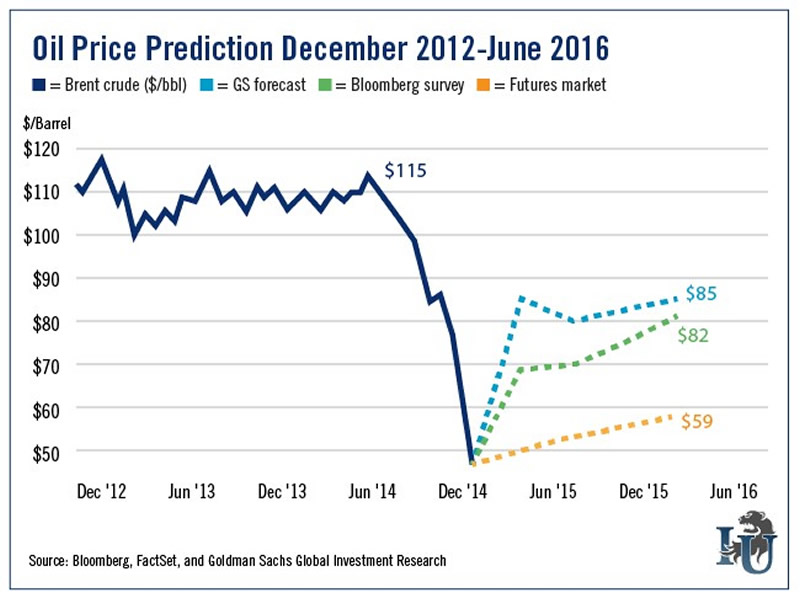
Will oil prices go beyond $100 again?

OPEC promised to stabilize supply during the second half of 2015 and blame the sharp decline to increased production from non-OPEC members. OPEC has been producing around 30 million barrel per day for almost a decade. 


Lately USA is producing shale oil and non open members are competing for a 20% share of the global market. Many European countries are consuming less and less oil because of natural gas consumption or because of more efficient combustible engines. 


The concern is not about oil prices. The world major problem now is the domino effect that is triggered whenever oil prices fall or rise suddenly. For example, the CAD/USA rate has been in a free fall since then. The following graph shows the trend. The Central Bank of Canada expected the worse hit of lower oil prices on the economy during the second half of 2015. Yet, the explicit impact on income during the last quarter of 2014 was clear especially in Alberta and West Canada. The bank maintains the overnight rate at its previous target of 0.75% in its press release published last week (March 4th, 2015). Bank of Canada is still trying to avoid dealing with the main issues (employment, social funding, stimulus...) because of conservative policies. How can any central banker passes a message that
financial stability risks are evolving as expected in January
!!!!

What is a reasonable oil barrel price? 

This is the break down of an crude barrel. The majority of the output is in jet fuel and gasoline for our cars. An easier comparison is to link the crude price to the gas prices in the market because everybody can see those numbers every day.


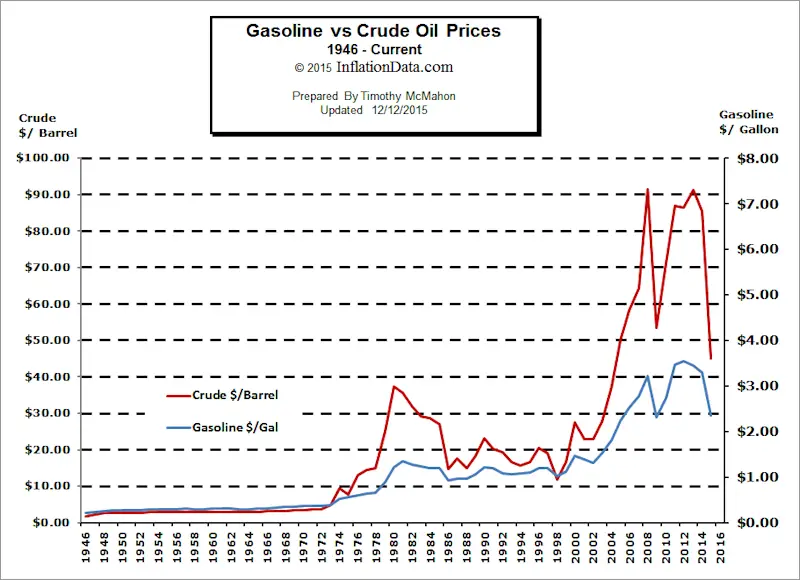
One can look at the following chart and implies a reasonable factor between crude price and gas prices.

A quick ratio can be around 25. Every barrel of oil was costing around 20-25 gallons of gas in US gas stations. The gas prices are much more stable than oil prices and hence when the barrel price is way above 25 times the gallon of gas, it should ring some bells. When it falls way below the price of 20 gallons of gas, it means the market is not left to its equilibrium. There are many causes for this concern:
  1. Higher demand for gas (summer months)
  2. Higher supply for oil (Saudi is not happy with Iran)
  3. Higher pressure from USA or China for cheaper oil during crisis times 
  4. Unexpected market adjustments (short terms only). 


Sunday, November 09, 2014

Fairness of bank loans

#‎Islamic_Finance‬: Applying a fixed price for money (interest rate) is unfair for investors and for the society. Islam prohibits the fact that a borrower carries the total risks of the failure while the lender receive a fixed income out of the venture regardless it is a total failure or a total success.

Someone might clain that the lender bear a minimum risk of default. We know that 70% of startup fails during the first three years of operations. We know also that the default rates on interest bearing rates is no more than 2% in good times and 6% in bad times (Federal reserve delinguishy rate).

Hence, faireness is not established and the entrepreneur cost is way beyond his capacity.

Saturday, November 01, 2014

House of Debt


The book is deep and offering an alternative point of view that is of prime importance to understand the deep depression cycle of the economy. 
 
Dr. Asad Zaman wrote:


Ben Bernanke has called explaining the Great Depression (GD) the “Holy Grail” of Macroeconomics. In the course of providing a convincing and surprising explanation of both GD and the Global Financial Crisis (GFC) of 2007-8, Mian & Sufi (2014) remark nonchalantly that Keynes did not have access to the wealth of data that is now available. “House of Debt” is a tour-de-force which succeeds in solving a problem which eminent economists like Keynes, Friedman, and many others failed to do. Not only does the book explain the root causes of the GFC, but it also shows how the continuing economic problems created by it can be resolved. In addition, Mian and Sufi suggest radical changes that need to be made to avoid such crises in the future. Even though the authors do not mention the Islamic angle, the main message of the book resonates strongly with Islamic ideas about finance. In particular, replacing debt and interest with equity based contracts is the key to avoiding recurrent financial crises in a capitalist system. In this review, we make some of these connections explicit. 

Mian and Sufi have written a thriller; a detective story in which we pursue many false leads, rejected by empirical evidence, before identifying the culprit (interest based debt) by putting together a variety of clues. This review offers a spoiler: a summary of the main arguments. The most exciting part, which is the strong empirical evidence offered in support of all of the assertions, is omitted from this brief summary. Although Mian and Sufi modestly attribute their success to the data, this data was available to all. Their tremendous contribution lies in focussing on the relevant portions and extracting extremely valuable information from delicate and subtle clues. We review some basic elements of the explanation to be provided, before plunging into the details.


To buy: http://www.amazon.ca/House-Debt-Recession-Prevent-Happening/dp/022608194X

Tuesday, October 22, 2013

Adam Smith "own interest" theory in a family context

In 1776, Adam Smith famously wrote: "It is not from the benevolence of the butcher, the brewer, or the baker, that we can expect our dinner, but from their regard to their own interest."

Own interest is not only greed. If they care for the quality, their clients will stick and thus they will make more money on long term.

The same concept applies at home, if the father cares for his retirement welfare, he should care for his wife and children and put efforts to treat them well. If the mother cares for her future happiness, she will treat her husband and children well not to loose their future care.

A good butcher is the one who smile and please his clients. An attractive bakery is the one whose owner is always nice with people and she strive to serve them well.

A happy family needs a smart father and a gentle pleasant mother.

Friday, September 20, 2013

Le Québec pourrait devenir un chef de file en matière de finance islamique

«Le Québec pourrait devenir un chef de file en matière de finance islamique» - Walid Hejazi, de la Rotman School of Management


Pourquoi croyez-vous qu'il serait avantageux pour le Canada de faire preuve de plus d'ouverture à l'égard de la finance islamique ?

L'industrie conforme à la charia est en croissance rapide à l'échelle mondiale. Aujourd'hui, il y a quelque 2 000 milliards de dollars dans les produits conformes à la charia. Or, les États-Unis, le Royaume-Uni et l'Australie sont beaucoup plus attrayants que le Canada pour les investisseurs islamiques. Ces pays ont fait en sorte que tous les investisseurs soient traités de la même manière sur le plan fiscal, qu'ils soient conformes à la charia ou non. Le Canada a besoin de dizaines de milliards d'investissements et il y a des milliards de dollars dans le Golfe qui ne demandent qu'à venir au pays.

Pourquoi les grandes banques canadiennes n'offrent-elles pas de services bancaires conformes à la charia ?

Le problème ne vient pas des banques, mais des lois en matière de fiscalité. Notamment, les investisseurs islamiques sont soumis à une double taxation. Par exemple, si un entrepreneur islamique veut emprunter 10 millions de dollars, il devra transférer dans une entité à vocation spéciale des actifs d'une valeur équivalente, puis les racheter au terme de l'emprunt. Dans l'intervalle, il devra payer un loyer pour utiliser ces actifs, ledit loyer remplaçant les intérêts, qui sont proscrits en finance islamique. Le problème, c'est que des taxes de vente seront imposées deux fois sur le montant du prêt. Il y a toujours moyen de créer des structures à l'étranger pour fabriquer des instruments financiers conformes à la charia, mais c'est aussi compliqué que coûteux. De plus, les sociétés qui le font sont mal encadrées et il y a un risque de fraude. Ce qu'il faudrait, c'est faire en sorte que les grandes banques offrent des instruments conformes à la charia, pas pour être gentils, mais parce que c'est rentable de le faire.

Le projet de charte des valeurs québécoises du gouvernement Marois fera-t-il reculer les investissements islamiques au Québec ?

C'est un risque, mais on peut aussi y voir une occasion. Si cette charte est accompagnée d'une législation facilitant l'accès aux instruments financiers islamiques, le Québec pourrait au contraire attirer ces investisseurs. De plus, si les institutions traditionnelles offraient des produits conformes à la charia, tous les musulmans pourraient effectuer leurs opérations bancaires à l'extérieur de leur communauté. C'est une approche qui favorise l'intégration et ce n'est pas un avantage qu'on confère aux musulmans, mais une option que les institutions offriraient à tous leurs clients, quelle que soit leur religion. En Grande-Bretagne, 40 % des hypothèques conformes à la charia qui sont accordées le sont à des non-musulmans.
 
http://www.lesaffaires.com/archives/generale/le-quebec-pourrait-devenir-un-chef-de-file-en-matiere-de-finance-islamique---walid-hejazi-de-la-rotman-school-of-management/561359#.Ujxsn9Jt55s


Wednesday, January 02, 2013


A brother wrote a touching story about his first approach with a potential lady for his life. He put up a very interesting story from the first sight to the minute he decided to forget about this un-ongoing relationship.


I have added few points that I would like to share with the few single brothers on my friends' list:

Bilal wrote: 

An interesting story indeed. Humans have a strong tendency to be in a relation. It might happened to a lot other people. Since, there is no way to go forward, I think you have taken the best step. Sleep well and get up because tomorrow will bring new sun, new hope, new chances and of course new ways to let the other side know that: Hey I am more serious than I look 
Wish you all the best and in sha2 Allah soon, you will find your soul mate. I suggest to get some help and not rely on the first sight feeling especially in an elevator. Eyes are deceiving believe it or not. 
For all brothers looking to get married:
You need to see the girl when she takes off her outdoor look. Mothers and sisters can help a lot with this. If you are not fortunate enough to have a mother to your side, ask the help from a woman you trust. Get some insights about the real life of the one that you appreciate. 
A final note, make sure she is able to understand you as well (with all your pitfalls and little things that we hide at home). Make sure she has a strong belief in Allah because you need her to raise your future children according to your life style.

Friday, December 28, 2012

No one has ever become poor by giving / charity does not decrease wealth


No one has ever become poor by giving / charity does not decrease wealth

I was reading on the net and suddenly found this quote. “No one has ever become poor by giving.” Anne Frank

It reminded be of an authentic hadeeth for the prophet Mouhammad (Peace be upon him) who said "Sadaqa does not decrease wealth".

It is an important concept that should be kept in mind. When humans tend to give, they might got puzzled by the fact that charity is a cost. However, this cost will bring happiness and it does not have associated risk or collateral damage to our wealth.

We need to rethink our giving insights and be generous when giving. Winter is a good time to give. Do not only think of X-mas as the commercial giving season.

Think of a sustainable act that will bring a smile to a poor face.
Think of a sustainable move that can go viral
Think of a sustainable trigger that awaken our humane nature.

Wednesday, October 10, 2012

High Frequency Trading, Providing Liquidity, or HFT

A student was asking me about high frequency trading as he is getting offers to work for such companies in Montreal. I wanted to give him a short briefing on the financial aspect of it and the IT aspect (as I am mixing both worlds).

I found a very interesting story on /. (slashdot.org) that simplifies the concept in very concise manner.

It is and this is the basis of high frequency trading... though on Wallstreet they call it "providing liquidity". It works like this:
Alice wants to sell 1000 shares of Acme Corp. She places an sell order for 1000 shares at $25.00 on the exchange, but she also places a minimum bid of $23.90 on the sell order. This minimum bid what Alice is willing to accept should someone counter-offer but is suppose to be secret, only the sell price will be published.
Bob is looking for 1000 shares of Acme Corp. He wants to place it in his portfolio for long-term growth, but he thinks it is currently worth less. Bob places a general buy order at $24.40 on the exchange. For the sake of simplicity we will say that is his only price, though he too could have a maximum bid he is will to pay.
So there is a sell order at $25.00 and a buy order at $24.40 pending on the exchange, nothing trades. Now Bob could make a buy offer to Alice at $24.40 and the trade would go thru, or Alice could make a sell offer to Bob at a lower price and follow thru. In a perfect world the exchange would figure it out and match the orders... but that doesn't happen without further action on the part of Alice or Bob.
Eve is a high frequency trader... Actually, Eve is a high frequency trading program at MegaTraders LLC. and has spotted that there are buy and sell orders for Acme Corp on the exchange. Eve places a bid at $24.99 for Alice's share, the exchange accepts, and then Eve immediately cancels the bid order. Eve has just learned that Alice is will to sell for less than the sell order posted. Eve then continues placing bids on Alice's stock, $24.98, $24.97, $24.96, etc., each time immediately canceling the buy when the exchange accepts the bid. Eve gets down to $23.89, at which point the exchange does not accept the bid for Alice's stock. Eve has just learned that Alice is willing to sell for as little as $23.90 and all of this has happened within 10s of milliseconds.
Remember all those articles on Slashdot about high frequency firm X laying their own fiber directly to the exchange to cut milliseconds off transit time? Having custom L2 firmware on their switches and no firewalls on their trading links to cut milliseconds off transit time? This is why they do it, so they can submit hundreds/thousands of buy/sell/cancel orders on a single stock within a fraction of a second to learn pricing differences between orders that otherwise should be secret.
So Eve now knows that Alice is will to sell for $23.90 and would perform the same procedure against Bob to discover his highest buy price. Once found Eve can now see a price difference advantages to herself. Eve buys the 1000 shares from Alice at $23.90 and then immediately sells the shares to Bob at $24.40, pocketing the $500 difference. On Wallstreet they call this "providing liquidity", anywhere else this would be considered insider trading and illegal. Multiple all this by several hundred firms with special inside access to the market place, each running their own competing Eve programs, and you quickly realize how the market can go into turmoil within seconds....

You will find more interesting stories about HFT online.It seems robots are already playing with our money. Nora Young (http://www.cbc.ca/spark/) was speaking last week about robots helping humans. It seems, there is a need now to explore the options of looking at how robots can beat humans. Yes computers are dummy machines that execute what they are told to do. However, computers can accumulate knowledge and use it much faster than humans. This is the horror part of it.